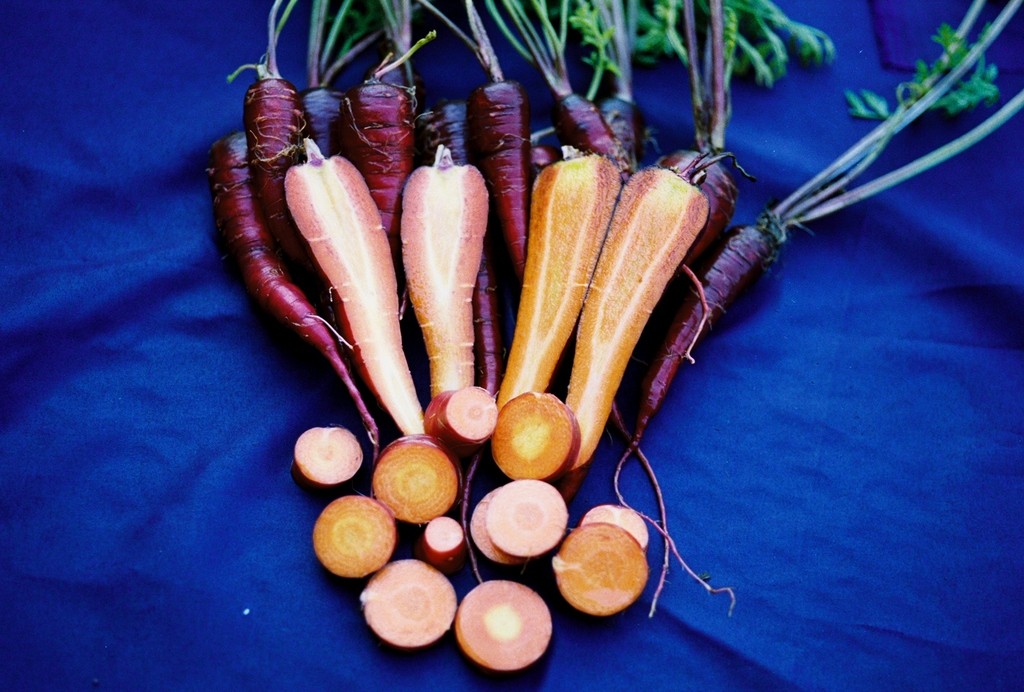
Description [ultimate_heading main_heading=”Carrot, Chantenay Long” main_heading_color=”#14693c” sub_heading_color=”#14693c” main_heading_font_family=”font_family:IM Fell DW Pica|font_call:IM Fell DW Pica|variant:italic” main_heading_style=”font-style:italic;” sub_heading_font_family=”font_family:IM Fell DW Pica|font_call:IM Fell DW Pica|variant:italic” sub_heading_style=”font-style:italic;” sub_heading_font_size=”desktop:18px;”] The carrot grows wild throughout the Mediterranean and as far east as the Orient. The region around Afghanistan may have been where the first carrots, which were purple, red or white, originated. Yellow carrots were first recorded in Turkey in the 900s. However, it was not until the 1600s that the first orange carrot was developed by the Dutch in Holland. In the United States, there appears to have been little interest in the root. The French became passionate about the orange vegetable and in the second half of the 19th century, the famous French seedhouse, Vilmorin-Andrieux, initiated a vigorous development program for carrots. Many of today’s varieties were developed during that time including Chantenay and Nantes. In North America, Queen Anne’s Lace is the carrot’s closest relative. Queen Anne’s Lace is actually a form of wild carrot, but the root has a woody core and there is almost no tender flesh that could be edible. [/ultimate_heading]