$24.29
$35.71
Comprehensive Questions and Answers1. What is the difference between Brass Compression Ferrules and Brass Crimp Ferrules?Brass Compression Ferrules are designed for compression-type tube fittings where a compression nut tightens against the ferrule to create a mechanical seal through radial compression. The ferrule can be disassembled and reassembled multiple times if needed. In contrast, Brass Crimp Ferrules are permanently attached to hoses using hydraulic crimping machines that mechanically deform the ferrule around the hose, creating a permanent connection that cannot be disassembled without destroying the ferrule. Crimp ferrules are primarily used in hydraulic hose assemblies and high-pressure applications where permanent connections are required for safety and reliability.2. Which Brass alloy grade is best for potable water applications?For potable water ferrule applications, we recommend C36000 Free Cutting Brass with Tin plating or Lead-Free Brass alloys such as C69300 (Silicon Brass) which contains no Lead content and complies with NSF/ANSI 61 drinking water system components standard. The Tin plating provides additional protection against dezincification corrosion in chlorinated water systems while maintaining compliance with European Drinking Water Directive and US Safe Drinking Water Act requirements. Lead-Free Brass ferrules are increasingly specified in municipal water systems and building plumbing installations where Lead content restrictions apply.3. What is the maximum operating pressure for Brass Compression Ferrules?The maximum working pressure for Brass Compression Ferrules depends on ferrule size, wall thickness, tube material, and compression fitting design. Generally, Brass Ferrules used in compression fittings can withstand working pressures up to 3000 PSI (207 Bar) for smaller sizes (1/8″ to 1/2″ tube OD) and approximately 1500-2000 PSI for larger sizes (3/4″ to 1″ tube OD). The burst pressure is typically four times the working pressure. For specific pressure ratings, it is essential to consider the complete fitting assembly including compression nut, body, and tube material properties, and consult applicable standards such as ISO 8434, SAE J514, or ASTM specifications.4. Can Brass Ferrules be reused after disassembly?Standard Brass Compression Ferrules can typically be reused 2-3 times if they are carefully removed without damage and the tube surface remains in good condition. However, each reassembly slightly reduces the sealing effectiveness because the ferrule bite marks on the tube create stress concentration points. For critical applications involving high pressures, hazardous fluids, or safety-critical systems, we recommend replacing compression ferrules during maintenance rather than reusing them. Brass Crimp Ferrules, by design, are permanent attachments and cannot be reused as they are mechanically deformed during installation and must be cut off for removal.5. What plating finish is recommended for marine applications?For marine and saltwater applications, we strongly recommend Nickel-Chrome plating combination or specialized Naval Brass material (C46400) which contains Tin addition for enhanced dezincification resistance. The Nickel-Chrome plating system consists of 10-12 micrometers Nickel undercoat for corrosion protection followed by 0.5 micrometers decorative Chrome topcoat that provides a hard, wear-resistant surface and brilliant finish. This multi-layer plating system offers superior resistance to saltwater spray, marine atmosphere corrosion, and UV degradation compared to single-layer plating options. For submerged applications, Naval Brass without plating often performs better than plated standard Brass due to the Tin content preventing selective corrosion.6. How are dimensional tolerances maintained during high-volume production?We maintain stringent dimensional tolerances during high-volume production through several quality control methodologies including in-process gauging with laser micrometers on CNC machines, statistical process control (SPC) monitoring with X-bar and R charts, first-off inspection protocols before production runs, and final inspection using coordinate measuring machines (CMM) and optical comparators. Our CNC turning centers feature automatic tool wear compensation systems that adjust cutting parameters to maintain dimensional accuracy throughout extended production runs. Additionally, we implement periodic verification using certified reference gauges traceable to national standards, and our ISO 9001:2015 certified quality management system ensures consistent adherence to customer specifications.7. What is the minimum order quantity for custom Brass Ferrules?Our minimum order quantity for custom-designed Brass Ferrules varies depending on complexity and required tooling investment. For simple modifications to standard ferrule designs requiring minimal tooling changes, the minimum order quantity can be as low as 500-1000 pieces. Complex custom designs requiring dedicated forging dies, progressive stamping tooling, or specialized machining fixtures typically require minimum order quantities of 5000-10,000 pieces to justify tooling amortization costs. However, we offer prototype and pre-production runs of 50-100 pieces for design validation and testing purposes before committing to large volume production. Our sales engineering team works closely with customers to optimize designs for manufacturability and minimize tooling investment.8. Are your Brass Ferrules compliant with international standards?Yes, our Brass Ferrules are manufactured in compliance with numerous international standards including ASTM B16 (Brass materials), ASTM B124 (Copper alloy rod and bar), ISO 8434 (Metallic tube connections), DIN 2353 (Compression fittings), BS 5200 (Tube fittings), JIS B8363 (Tube fittings), and SAE J514 (Hydraulic tube fittings). Our manufacturing facility is ISO 9001:2015 certified for quality management, ISO 14001:2015 certified for environmental management, and IATF 16949:2016 certified for automotive quality management. Material test certificates provided with each shipment verify compliance with specified material grades and mechanical properties according to applicable standards.9. What testing procedures ensure ferrule quality and reliability?Our comprehensive testing procedures include dimensional inspection using CMM and optical comparators to verify tolerances, material composition verification through optical emission spectrometry (OES) conforming to ASTM E415, mechanical property testing including tensile strength (ASTM E8) and hardness testing (ASTM E18/E10), surface finish verification using portable roughness testers calibrated to ISO 4287, hydrostatic pressure testing at 1.5x rated working pressure for pressure-critical applications, salt spray corrosion testing per ASTM B117 for plated ferrules, and pull-out force testing for crimp ferrules to verify crimping integrity. First article inspection reports documenting all critical dimensions and test results are provided for new production orders.10. Can you provide custom packaging with our company logo and labeling?Absolutely, we offer comprehensive custom packaging solutions tailored to customer requirements including branded carton boxes with customer logo and company information, custom label printing with part numbers, barcode identification, and technical specifications, blister pack packaging for retail applications, plastic bins or trays for automated assembly line feeding, and anti-corrosion packaging with VCI (volatile corrosion inhibitor) materials for long-term storage or ocean freight shipments. Our packaging capabilities support just-in-time delivery programs, consignment inventory arrangements, and vendor-managed inventory systems. We can also provide kitting services combining multiple ferrule sizes or related components into ready-to-use assembly packages.11. What is the temperature resistance of Brass Ferrules?Brass Ferrules manufactured from C36000 Free Cutting Brass alloy can reliably operate in temperature ranges from -40°C to 150°C (-40°F to 302°F) without significant loss of mechanical properties or dimensional stability. Below -40°C, Brass maintains ductility unlike some steel alloys that become brittle, making Brass Ferrules suitable for cryogenic applications in refrigeration systems. At elevated temperatures approaching 150°C, prolonged exposure may cause stress relaxation affecting compression seal integrity, and Brass alloys with higher Copper content such as C27400 Yellow Brass offer better high-temperature performance. For applications exceeding 150°C operating temperature, we recommend alternative materials such as Stainless Steel or high-temperature Bronze alloys.12. How do I select the correct ferrule size for my application?Ferrule size selection primarily depends on the outer diameter of the tube or hose being connected. For compression ferrules, measure the tube outer diameter (OD) precisely using a micrometer or caliper, then select a ferrule with internal diameter slightly larger (typically 0.05-0.1mm clearance) than the tube OD to allow easy insertion while maintaining sufficient wall contact for effective compression. Consider the tube wall thickness when selecting ferrule length to ensure adequate gripping length without extending beyond the compression fitting body. For crimp ferrules, match the ferrule internal diameter to the hose outer diameter according to hose manufacturer specifications, and verify that the ferrule material and crimp diameter are compatible with your crimping machine die set.13. What is dezincification and how do your ferrules resist it?Dezincification is a selective corrosion process affecting Brass alloys where Zinc preferentially leaches out from the alloy structure in corrosive environments (particularly chlorinated water systems), leaving behind a porous Copper-rich layer with severely degraded mechanical strength. Our Brass Ferrules resist dezincification through several approaches including material selection of dezincification-resistant Brass grades containing Tin addition (Naval Brass C46400), application of protective Tin plating that creates a barrier preventing direct contact between Brass and corrosive media, and offering Lead-Free Brass alloys with Silicon addition (C69300) that exhibit inherent dezincification resistance. For potable water applications in aggressive water chemistry conditions, we recommend Tin-plated C36000 or Lead-Free Silicon Brass materials.14. Can your engineering team modify ferrule designs to improve performance?Yes, our experienced engineering team possesses extensive expertise in ferrule design optimization and regularly collaborates with customers to enhance ferrule performance for specific applications. We provide design consultation services including finite element analysis (FEA) to evaluate stress distribution and predict pressure ratings, modification of ferrule geometry to optimize compression characteristics or crimping performance, material substitution recommendations based on compatibility with operating fluids and environmental conditions, incorporation of special features such as internal serrations for improved hose grip or external knurling for manual installation, and development of completely custom ferrule designs for unique applications. We can review customer technical drawings and suggest modifications to improve manufacturability, reduce production costs, or enhance functional performance.15. What are your capabilities for urgent or emergency ferrule requirements?We understand that equipment breakdowns and urgent project requirements sometimes necessitate expedited ferrule delivery. Our expedited production services can reduce standard 4-6 week lead times to 2-3 weeks for orders of standard ferrule configurations manufactured from in-stock Brass materials. Rush orders receive priority scheduling on our CNC machining centers and accelerated processing through quality inspection and finishing operations. For extremely urgent requirements, we maintain strategic safety stock inventory of commonly specified ferrule sizes that can be shipped within 24-48 hours of order confirmation. International customers requiring urgent deliveries can benefit from our air freight shipping arrangements with express courier services ensuring delivery within 3-5 days to most global destinations. Our responsive customer service team is available to discuss urgent requirements and develop solutions to meet critical delivery deadlines.
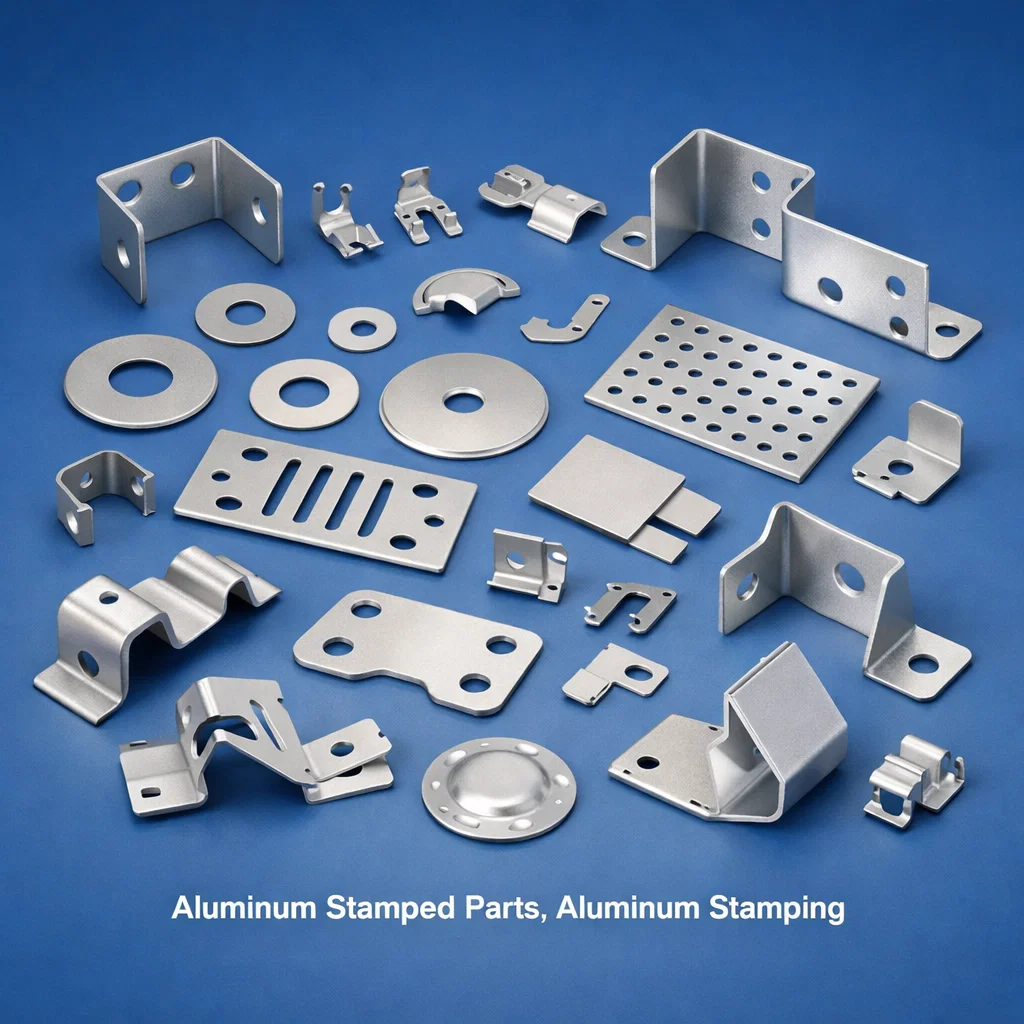
Aluminum Parts